Roofing Invoice Templates and Generator
Create professional, itemized roofing bills in seconds. Built for roofing contractors, residential roofers, and commercial repair teams. 100% free with instant PDF download.
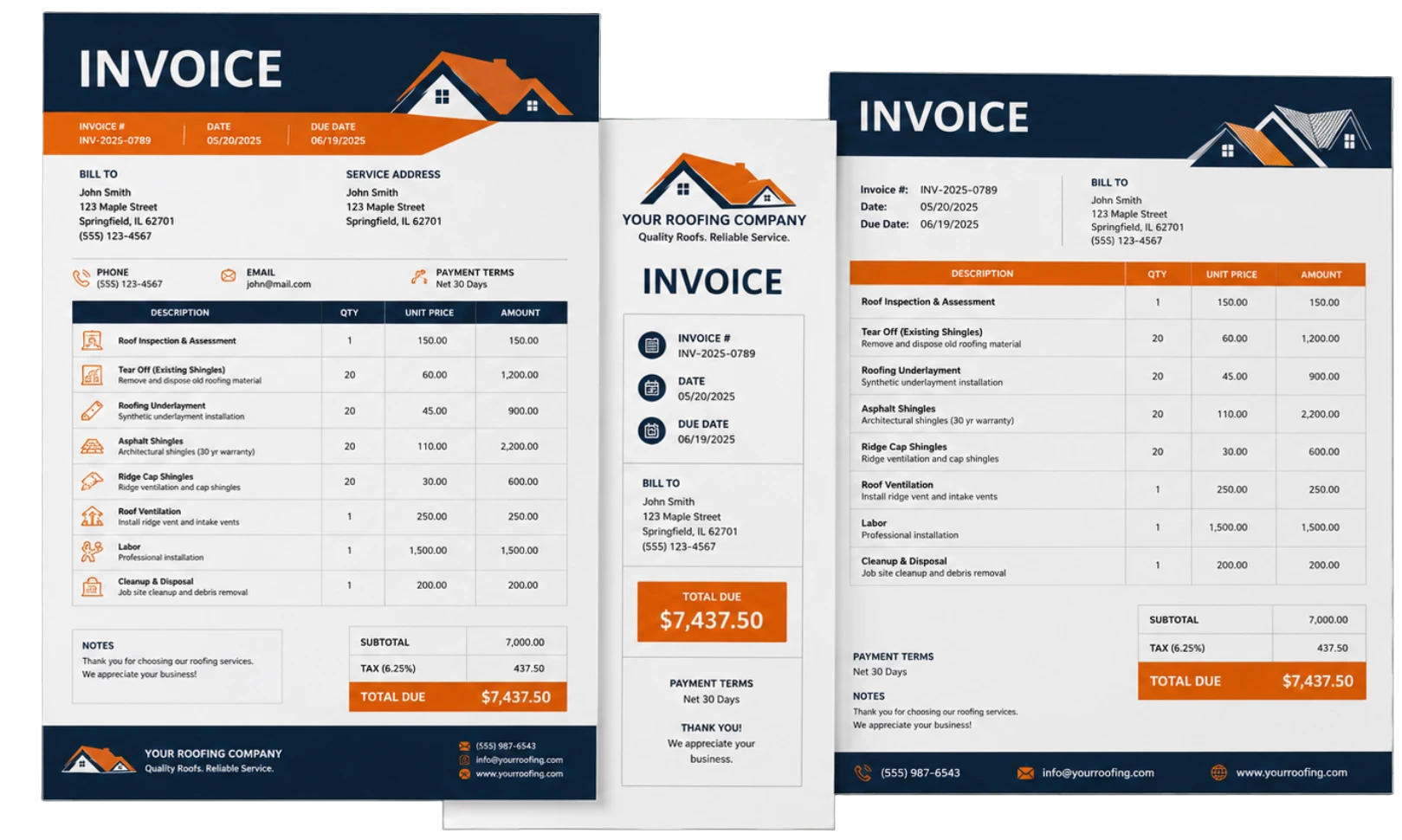
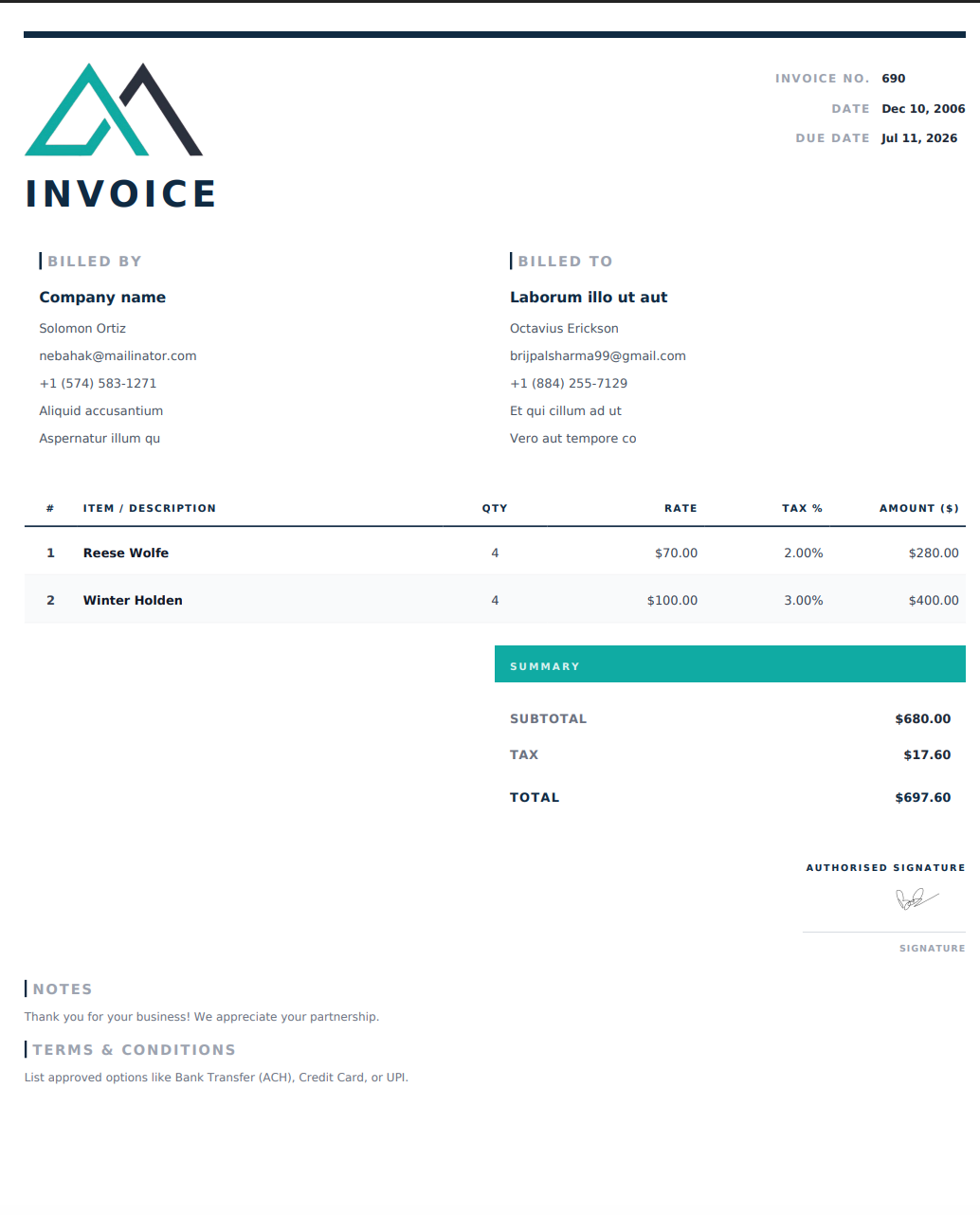
Invoice Preview
Authorised Signature
Choose Your Roofing Invoice Template
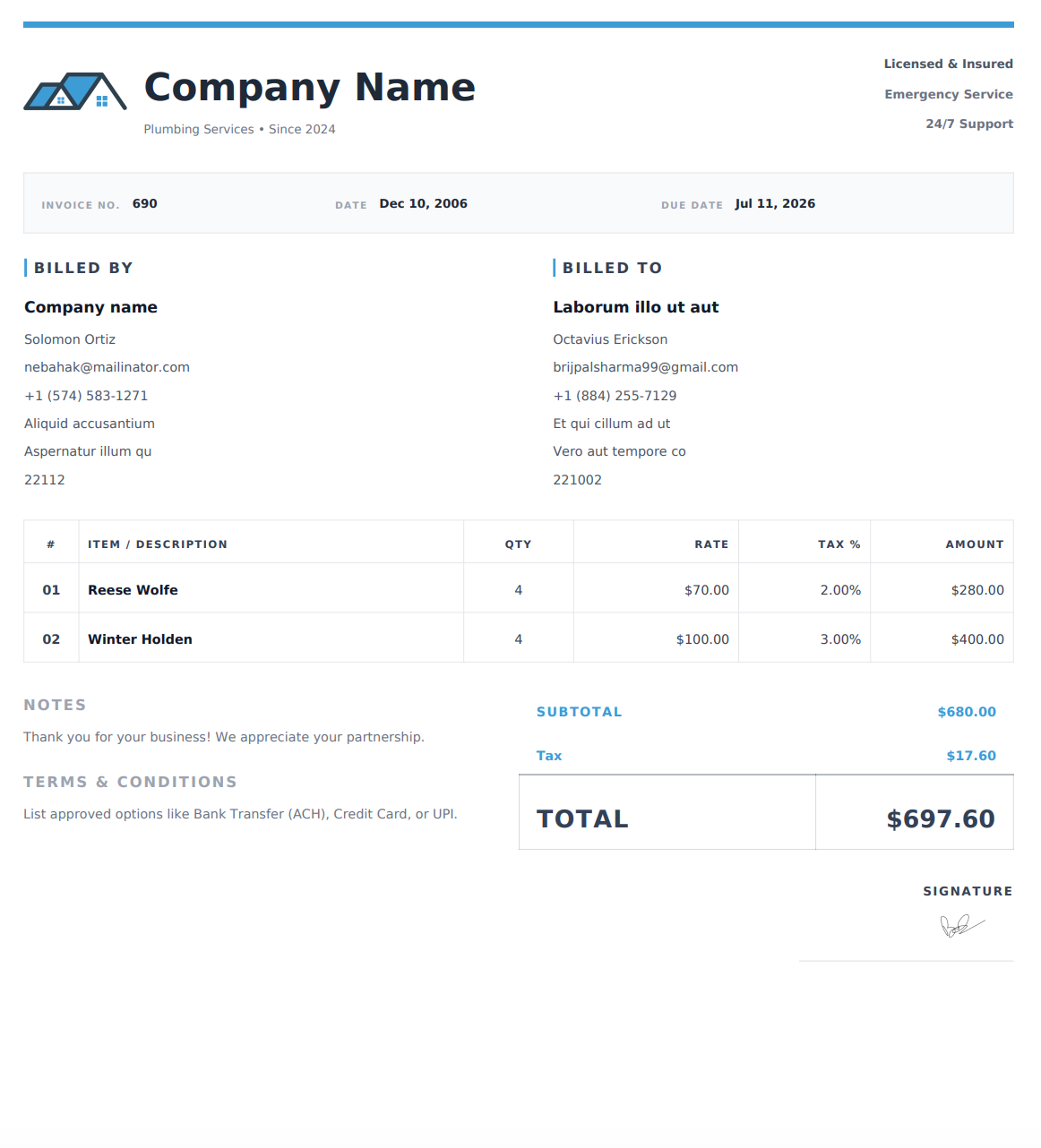
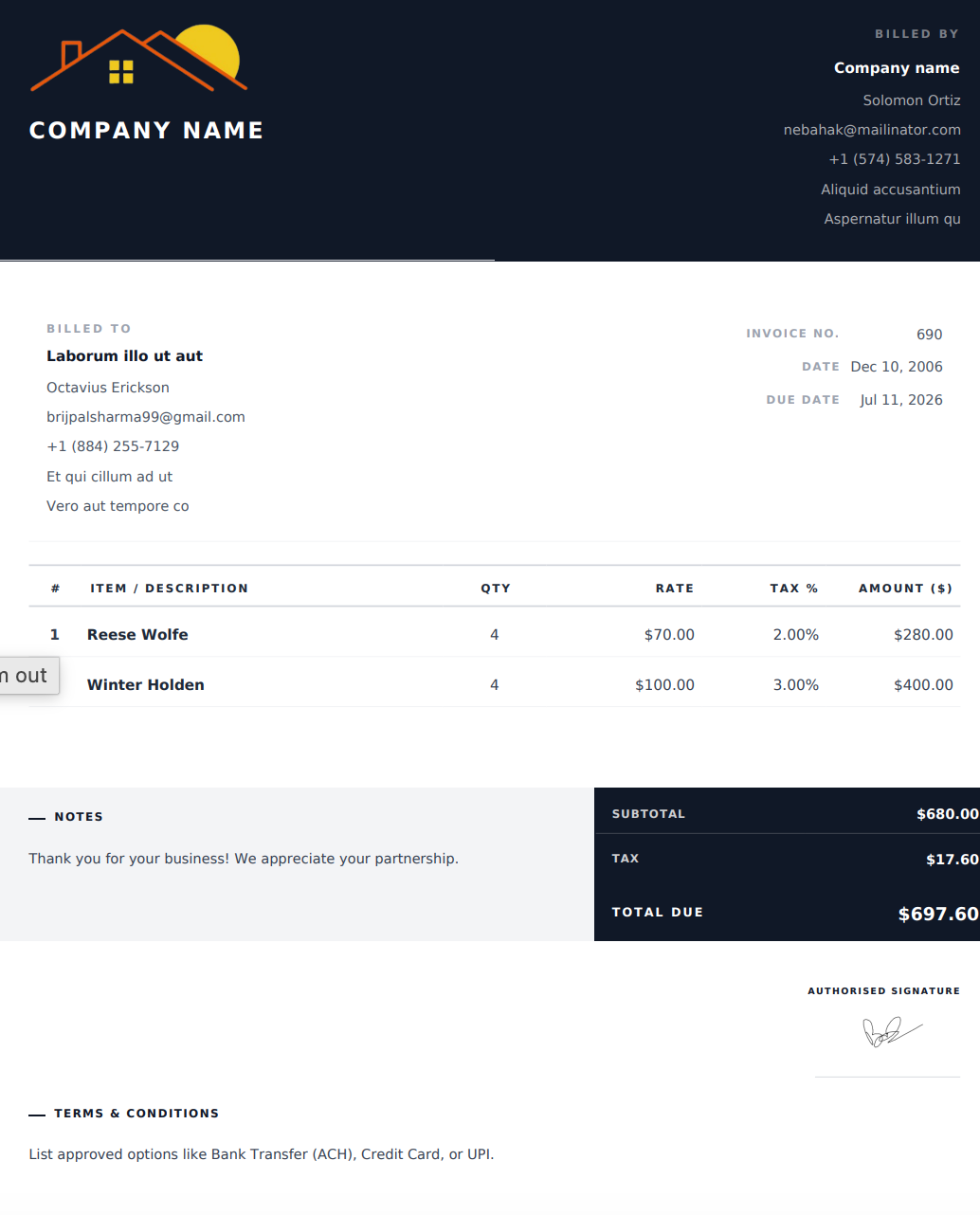
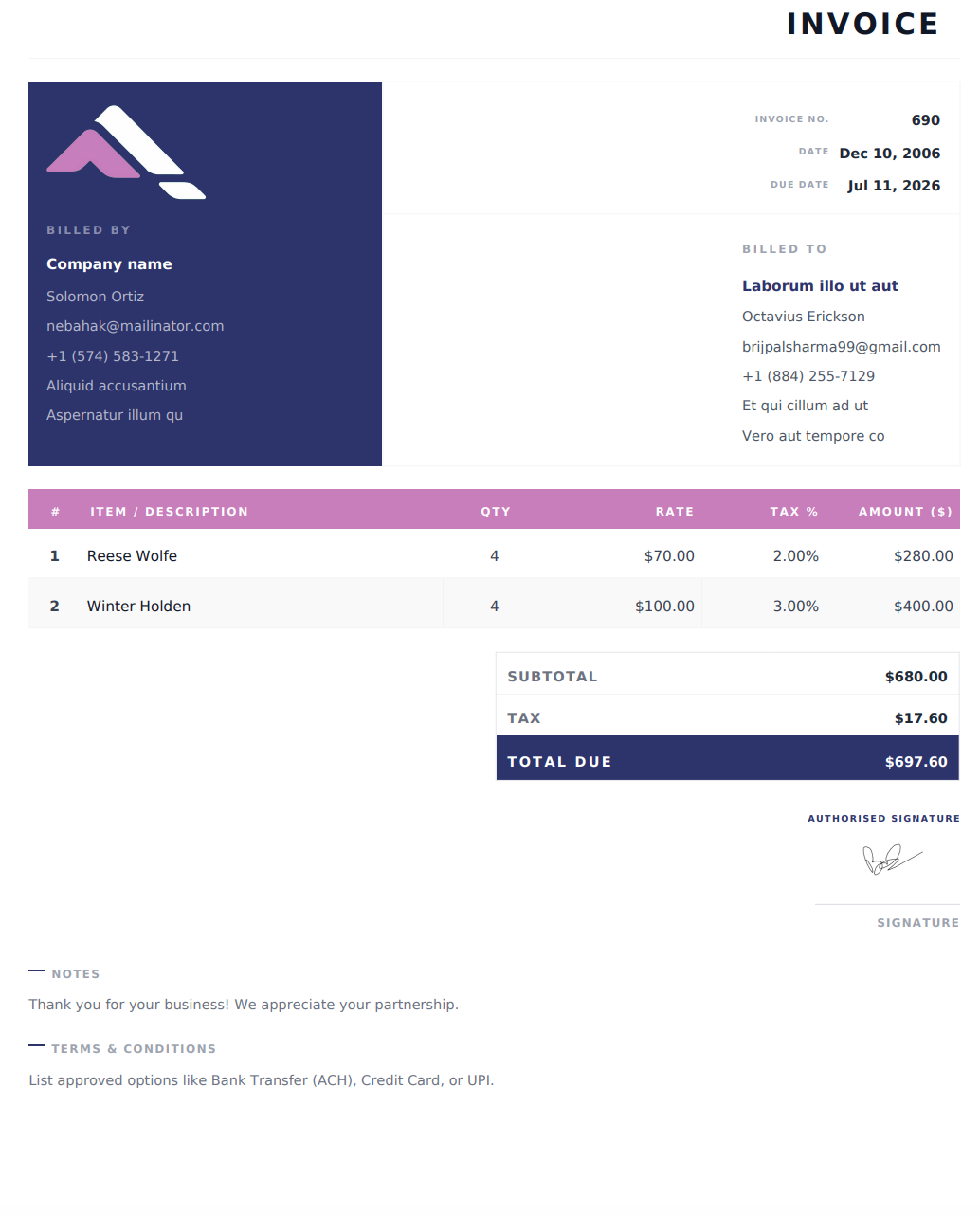
Select a design below to start building your Roofing Invoice.
Roofing Invoice Guide: How to Create a Professional Roofing Invoice
A professional roofing invoice is more than just a payment request. It serves as an official record of the work completed, helps build trust with your clients, and makes it easier to receive payments on time. Whether you're an independent roofer or a roofing company, a well-organized invoice ensures every project is documented accurately while presenting your business in a professional manner.
Our free Roofing Invoice Generator helps you create polished, print-ready invoices in just a few minutes. Simply enter your business information, add your customer details, list the roofing services provided, and download a professional PDF instantly—completely free and without any watermark.
What Should a Roofing Invoice Include?
A roofing invoice should provide all the information your client needs to understand the completed work and the amount due. Start by including your business name, logo, contact information, and contractor license number (if required in your state or region). Next, add the client's name, property address, invoice number, issue date, and payment due date.
The invoice should also contain a detailed breakdown of labor, roofing materials, taxes, discounts, and any additional charges. Finally, include the total amount due along with your accepted payment methods and payment terms. A complete invoice minimizes confusion, reduces payment disputes, and creates a more professional experience for your customers.
How to Choose the Right Roofing Invoice Template
The best roofing invoice template should be simple, professional, and easy to understand. Clients should be able to quickly review the services performed, materials used, and the final amount due without searching through unnecessary information.
Look for a template that provides enough space to itemize labor and materials separately, display your company branding, and clearly highlight the invoice total and payment due date. It's also helpful to choose a layout that allows you to add custom notes, warranty information, and additional line items whenever required.
Common Roofing Invoice Line Items
Every roofing project is different, but most invoices include a combination of labor and material charges. Common line items include roof inspections, tear-off and debris removal, shingle installation, underlayment, flashing, roof ventilation, gutter work, skylight installation, chimney flashing repairs, roof decking replacement, equipment rental, and site cleanup.
Listing each service separately helps customers understand exactly what they're paying for while making your invoice more transparent and easier to review.
Tips for Getting Paid Faster
Good invoicing habits can significantly reduce payment delays. Send your invoice as soon as the roofing project is completed, use a unique invoice number for every job, and separate labor charges from material costs whenever possible. Clearly mention your payment terms, such as Due Upon Receipt or Net 15, and provide multiple payment options for your clients.
Before sending the invoice, review all project details carefully to ensure the pricing and calculations are accurate. Keeping copies of every invoice will also make bookkeeping, tax preparation, and future customer support much easier.
Frequently Asked Questions
Q1. What should be included in a professional roofing invoice?
A professional roofing invoice should include your business information, client details, invoice number, issue date, due date, a detailed list of roofing services and materials, labor charges, taxes, payment terms, and the final amount due. Including your company logo and contractor license number (if applicable) also adds credibility.
Q2. Should labor and materials be listed separately?
Yes. Separating labor and material costs makes your invoice easier to understand, improves pricing transparency, and simplifies bookkeeping and tax reporting.
Q3. Can I use this roofing invoice template for both residential and commercial projects?
Absolutely. The template works well for residential roof repairs, roof replacements, new roof installations, commercial roofing projects, maintenance contracts, and emergency roofing services. You can easily add additional line items to match the scope of any project.
Q4. How do I send the invoice to my client?
After completing your invoice in the generator, download it as a professional PDF. You can email it directly to your client, send it through WhatsApp or another messaging app, or print a hard copy if required.
Q5. Is the Roofing Invoice Generator free?
Yes. The Roofing Invoice Generator on ContractorBill.com is completely free to use. No registration is required, and your downloaded PDF contains no watermark.
Q6. Can I customize the invoice before downloading it?
Yes. You can customize your company information, invoice title, customer details, line items, taxes, discounts, notes, payment terms, logo, signature, and colors before downloading the final PDF.